Why Small Businesses Need Systems Before They Need More Traffic
Why Small Businesses Need Systems Before They Need More Traffic
A lot of small businesses think growth means one thing first: more traffic. More website visitors. More leads. More calls. More attention. More visibility.
And sometimes that is true.
But often, more traffic is not the first thing the business needs. Often, the business already has enough early demand to reveal the real issue.
The real issue is that the system receiving that demand is too fragile.
Calls are missed. Follow-up is delayed. Booking is inconsistent. The owner becomes the backup for everything. Leads come in, but the path forward is unclear.
In that situation, more traffic does not solve the problem. It magnifies it.
That is why many small businesses need systems before they need more traffic. Not because marketing does not matter. Because marketing works best when the front door can actually hold what it attracts.
Why More Traffic Feels Like the Obvious Answer
When revenue feels tight or growth feels slow, traffic is easy to point to. If more people knew about the business, things would improve. If the website got more visits, leads would increase.
There is truth in that. But traffic is only one part of the equation. The other part is what happens after attention arrives.
Because attention is not revenue. Interest is not revenue. Inquiry is not revenue. There is a whole operational layer between visibility and actual conversion. If that layer is weak, the business may already be leaking more than it realizes.
The Problem with Scaling a Weak Front Door
A weak front door can still function when volume is low. That is why the issue often stays hidden for a while.
At lower volume: the owner manually catches missed opportunities, the team remembers to follow up later, voicemail feels manageable, scattered messages still get handled eventually, booking friction feels annoying but survivable.
The business compensates. But that compensation depends on human effort, memory, and availability.
As soon as traffic increases, that workaround starts to break. Now there are more missed handoffs, more delayed follow-up, more inquiries sitting in different places, more pressure on staff, more owner dependency, and more good leads cooling off before the next step.
This is why business systems before marketing is such an important idea. If the receiving process is unstable, traffic growth turns fragility into stress.
More Leads Do Not Automatically Mean More Revenue
More leads can create more revenue. But only if the business can respond consistently, qualify clearly, guide the next step, support booking, and follow through without excessive delay.
If not, more leads just create more strain. That strain usually shows up as:
Lower conversion than expected
Wasted marketing spend
Owner overwhelm
Reactive operations
Staff interruption
Confusing handoff between inquiry and action
At that point, the business is not suffering from lack of opportunity. It is suffering from lack of structure.
Where Businesses Usually Feel the Strain First
1. First contact
A lead reaches out, but no one is available right away. The inquiry hits voicemail, a form, or silence.
2. Follow-up
Someone intends to get back to the lead, but the timing depends on who is free and what else is happening.
3. Intake
The business collects some information, but not in a consistent way. Different people handle it differently.
4. Booking
The next step is possible, but not always easy. Too much back-and-forth slows momentum.
5. Handoff
The inquiry is acknowledged, but it is not clear who owns the next step or what context was already gathered.
These are not marketing problems. They are workflow problems. And until they are addressed, more demand often creates more friction rather than more ease.
Why Owners Often Miss This
Many owners are so used to compensating for operational gaps that the gaps begin to feel normal. They stay on top of things personally. They check messages late. They return missed calls when they can. They hold the business together through attention and effort.
That works for a while. But it also hides the true condition of the system.
So when growth slows, the owner often concludes: "We need more leads." Sometimes the more accurate answer is: "We need a business that can receive leads more cleanly."
That is a different diagnosis. And it leads to a different next move.
What Strong Systems Actually Mean
When people hear the word systems, they sometimes imagine complexity. More tools. More software. More dashboards. More rules.
That is not what good systems mean here. A strong system simply means the business has a repeatable, reliable path for what happens when demand shows up.
That includes how inquiries are received, how they are acknowledged, how basic information is captured, how next steps are offered, how booking is supported, how humans step in with context, and how fewer things depend on manual rescue.
In other words, a system is not bureaucracy. It is clarity.
Systems Reduce Waste Before They Create Scale
This is the practical reason systems matter before traffic. They reduce waste.
Without stronger structure, the business wastes attention, intent, marketing spend, time, staff energy, and owner focus.
A better system helps recover value from the demand that already exists. That is often the fastest form of growth available. Not because it creates new interest from nowhere. Because it stops unnecessary leakage.
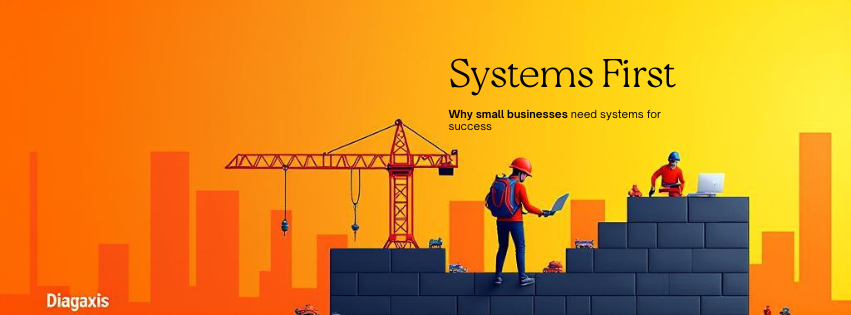
That is why fix systems before scaling is not just an operations principle. It is a revenue principle.
Why This Matters Especially for Service Businesses
Service businesses feel this quickly because they are usually balancing delivery and intake at the same time. The same people serving clients are often the ones expected to answer calls, respond to messages, manage intake, coordinate booking, and handle follow-up.
That creates a built-in tension. The business needs demand, but the business is also busy fulfilling demand.
Without stronger systems, growth can feel like more interruption instead of more leverage.
The Better Question to Ask Before More Marketing
Instead of asking only "How do we get more leads?" ask: "What happens to the leads we already get?"
That question changes everything. Look at:
How fast the business responds
Whether the next step is clear
How many inquiries depend on manual follow-up
What happens after hours
Whether booking is easy
Whether the owner is still the glue holding early-stage flow together
If the current system is already stretched, more traffic will not feel like growth. It will feel like pressure.
What Stronger Systems Create
When the system improves, the business becomes easier to engage with. Leads are acknowledged more consistently. The next step becomes clearer. Booking moves more smoothly. The team is less reactive. The owner stops carrying every loose end. Marketing starts to perform better because fewer leads are lost in the gap.
Better systems do not compete with marketing. They make marketing more valuable.
Where to Start
Do not start by redesigning everything. Start by mapping the path from: attention → inquiry → response → intake → booking → handoff
Then ask:
Where is the delay?
Where is the confusion?
Where do leads wait too long?
Where does the owner rescue the process manually?
Which part is repetitive enough to structure better?
Most businesses do not need a giant rebuild. They need to strengthen the front-door workflow first: first response, intake, qualification, booking support, and handoff.
Final Thought
More traffic is not always the first answer. Sometimes the business already has enough signal to show what is really happening.
If inquiries are being missed, delayed, or handled inconsistently, then the next step is not necessarily to pour more demand into the top of the funnel. It is to strengthen the system receiving that demand.
Because traffic without structure creates pressure. Traffic with structure creates leverage.
That is why small businesses often need systems before they need more traffic. Not forever. Just long enough to make growth actually hold.
Thinking about more traffic, but not sure the front door is ready for it?
Diagaxis helps small businesses strengthen first contact, intake, and booking so growth creates more stability instead of more operational strain.
See how it works.


